
40過ぎからの起業でどんなビジネスを始めたらよい?
What Kind of Business Should You Start When Launching a Business After 40?
僕はいくつかの起業関連のコミュニティに所属しているのですが、こんな質問を受けることがあります。
「どんなビジネスで起業するのがよいと思いますか?」
その前にまず「なぜ起業するのですか?」というのを明らかにしないと何とも言えないのですが、まず僕は自分のビジネスの性質を固めていきました。
- 元手ゼロ
- 一人でできる
- 固定費が限りなく低く、利益率が100%に近い
- 人間関係のストレスフリー
- 仕事の時間や休みは自分で決められる
- 1+1が100にも1000にもなる
- 供給よりも需要の大きいもの
- 継続性の高いもの
- 掛け持ちができ、それぞれの仕事に相乗効果がある
結果、僕はフルリモートでのマーケター、コンサルタント、セールスライター、(部分的に)WEBディレクターになりました(条件からビジネスに絞る込む経緯や方法は、また別の機会で)。
これにプラスして保険的ながらエンジニアも始めるつもりですし、このブログが成長した暁にはブロガーも肩書に加えたいですね。
起業するビジネスは、よっぽど本人にこだわりや手厚い顧客、豊富な資金でもない限り、つまりゼロからスタートするなら僕と同じような条件でやることを絞り込んで決められることを強くおすすめします。
特に「元手ゼロ」「一人でできる」「固定費が限りなく低く、利益率が100%に近い」というところはかなり重要なはずです。
ゼロからスタートしていきなり大金が転がり込んでくることはありません。どんな商売であれ、人は実績がそれなりにないと見向きしてくれないものなのです。
そうすると、最初の実績を作っていくには「無料」や「少額でのお試し」というアプローチが避けられません。
結果的に売上は少ないが、否応なしに「日々の支払い」はやってきます。「日々の支払い」は自分の生活はもちろん、自分のビジネスに関するものも、です。
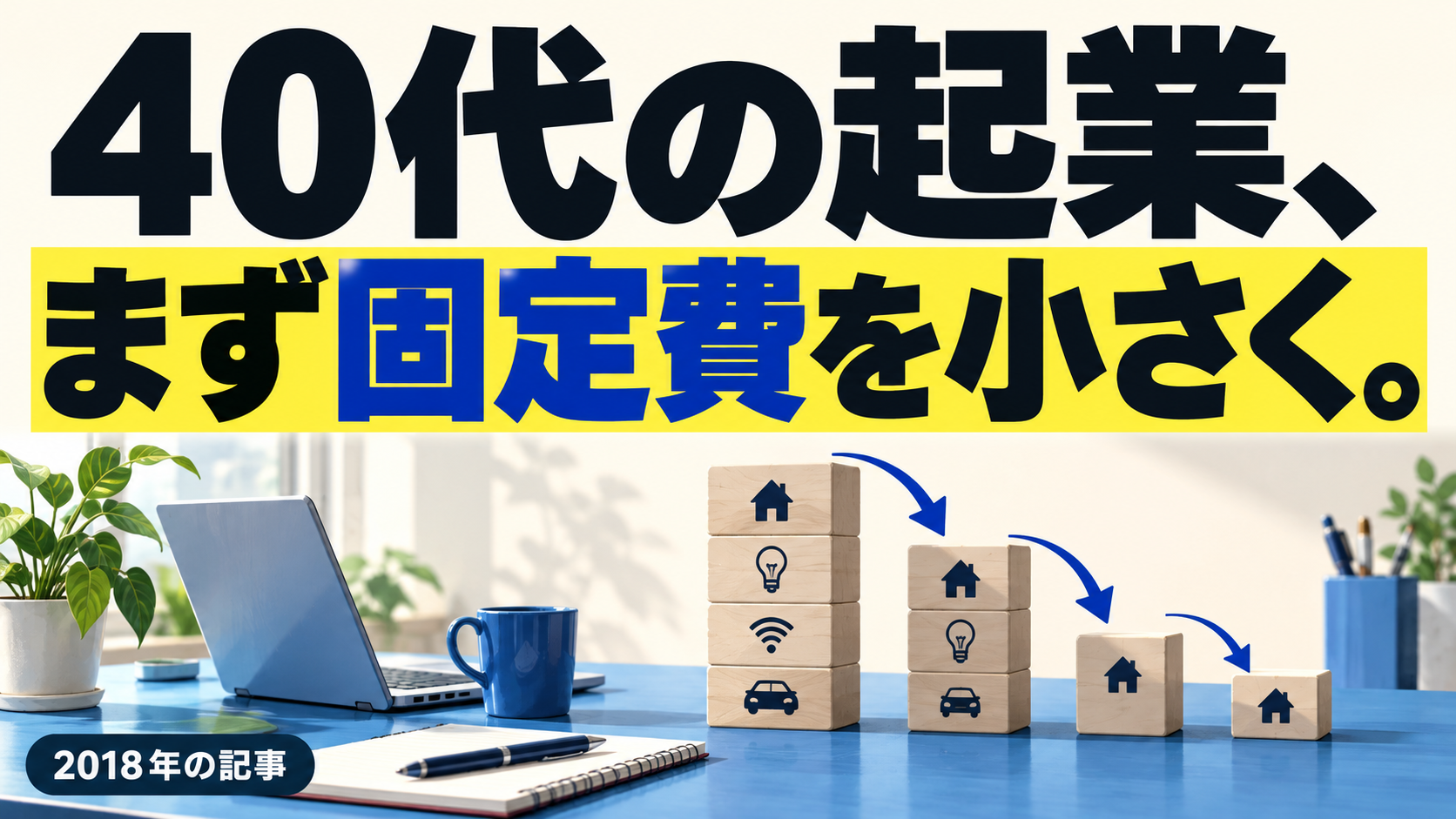
なので、支払いは逃れられないので、ビジネスを始める段階で固定費が限りなく低いものを選択するのが賢明ということになります。
※ちなみに僕の最初の売上は、月8,000〜12,000円でした。それでも恵まれたほうだなと自分では思っています。
飲食店や物販は避けたほうがいいビジネスでしょうね(しかも競合が多い)。
誰かに出資してもらったり、お金を借りて始めることもできますが、それは出資者や貸主に主導権を渡すということになります。
そうすると「自分がオーナーになって自由に生きたい!」という思いをもって起業していた場合、全く正反対な毎日を送らないといけないわけです。
さて、先程「日々の支払い」と書きましたが、40過ぎの方々は(家庭持ちの方は特に)自分の生活のでも大きなボリュームだと思います。
だからこそ、「元手ゼロ」「一人でできる」「固定費が限りなく低く、利益率が100%に近い」ものを選ぶことをおすすめします。
独身だったら痛手を被るのが自分だけでも、家族にも影響が及ぶならなおさらです。
(メリットもデメリットもありますが)副業からスタートできるかどうかも重要でしょうね。
あとインターネットやマーケティングは40過ぎの方々こそ、一生懸命学び、しっかり活用されたほうがよいかと思います。
「1+1が100にも1000にもなる」と書きましたが、インターネットやマーケティングはまさにレバレッジが効くツールですし、これから起業する人たち(特に若い起業家)は当たり前のように使いこなして、あっという間にあなたの商圏に入り込んできます。
「ネットやパソコンは苦手」といって放棄するいうのは、戦車や空母を持った軍隊に竹槍で戦いを挑むのと同じです。
テクノロジーは進化する一方で、ツール自体はどんどん簡単になっているので、使わない手はないでしょう。
I belong to several entrepreneurship-related communities, and I sometimes get asked this:
"What kind of business do you think is best to start with?"
Honestly, I can't answer that without first clarifying "Why are you starting a business?" In my own case, I started by pinning down the nature of the business I wanted:
- Zero startup capital
- Can be done alone
- Fixed costs as low as possible, profit margin close to 100%
- Free of relationship stress
- I can decide my own working hours and days off
- 1+1 can become 100 or even 1,000
- Demand is greater than supply
- Highly sustainable
- Can be done in parallel, with synergy between each job
As a result, I became a fully remote marketer, consultant, sales writer, and (partly) web director (I'll cover how I narrowed my options down from these conditions another time).
On top of this, as a kind of insurance, I plan to start working as an engineer too, and when this blog grows, I'd like to add blogger to my titles as well.
Unless you have a strong personal attachment, loyal customers, or abundant funds—in other words, if you're starting from zero—I strongly recommend narrowing down your business based on conditions like mine.
In particular, "zero startup capital," "can be done alone," and "fixed costs as low as possible, profit margin close to 100%" should be quite important.
When you start from zero, big money doesn't suddenly roll in. In any business, people won't pay attention to you unless you have a decent track record.
So to build your first track record, approaches like "free" or "low-cost trials" are unavoidable.
As a result, sales are small, but "daily payments" come whether you like it or not. "Daily payments" include not only your living expenses but also those related to your business.
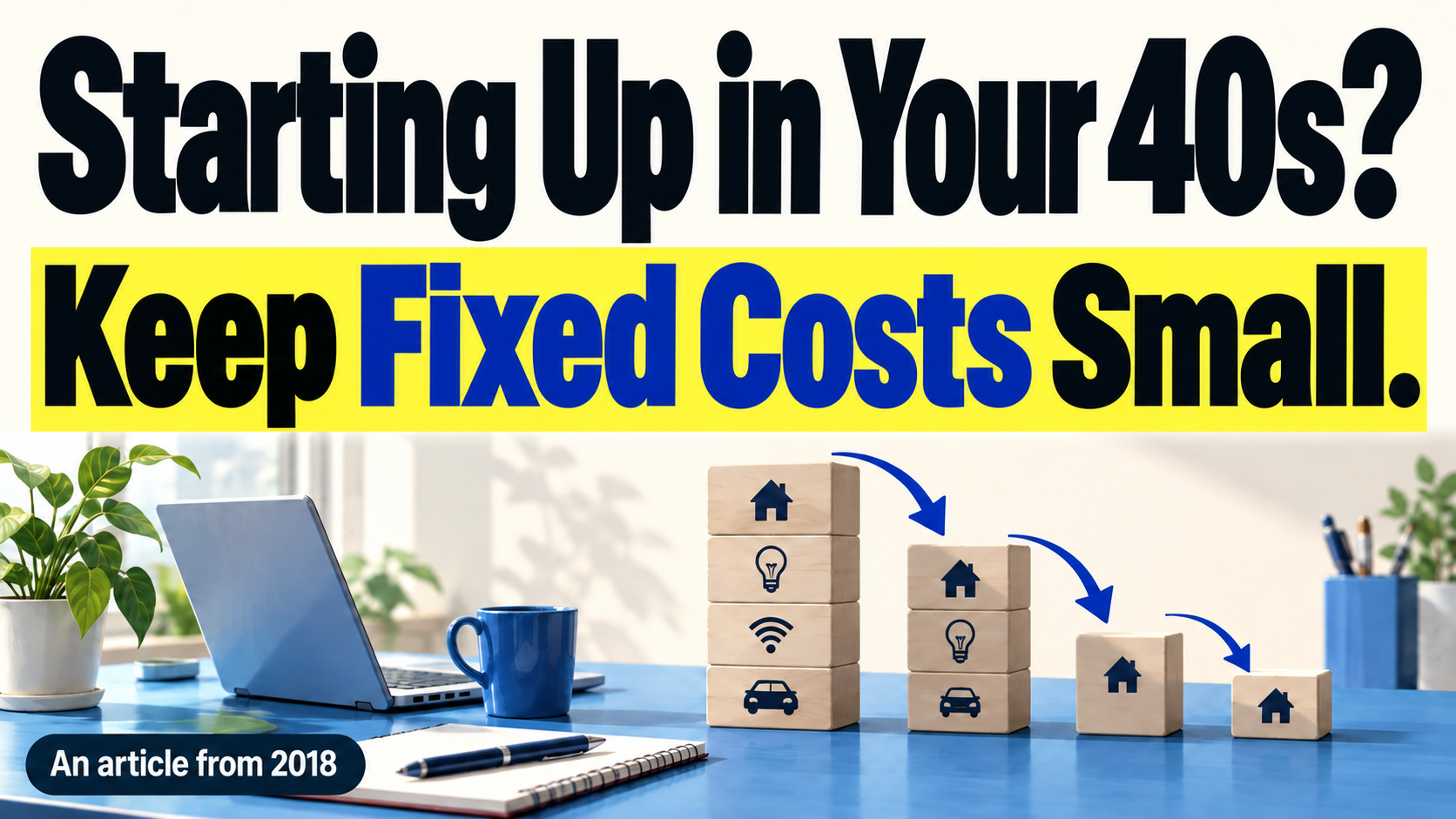
So, since you can't escape payments, it's wise to choose something with fixed costs as low as possible at the stage of starting a business.
*By the way, my first sales were 8,000–12,000 yen a month. Even so, I think I was relatively fortunate.
Restaurants and retail are probably businesses you'd better avoid (and they have lots of competitors).
You can also start by having someone invest in you or by borrowing money, but that means handing the initiative to the investor or lender.
Then, if you started a business with the desire to "become an owner and live freely!", you'd have to live days that are the complete opposite.
Now, I wrote "daily payments" earlier, and for people over 40 (especially those with families), I imagine their living expenses alone are substantial.
That's exactly why I recommend choosing something that is "zero startup capital," "can be done alone," and "fixed costs as low as possible, profit margin close to 100%."
That matters even if you're single and the only one who'd get hurt—and all the more so if your family would be affected too.
Whether you can start from a side business is probably important too (there are both advantages and disadvantages).
Also, I think it's precisely people over 40 who should study the internet and marketing hard and make full use of them.
I wrote "1+1 can become 100 or even 1,000," and the internet and marketing are truly tools that provide leverage; people starting businesses from now on (especially young entrepreneurs) master them as a matter of course and will move into your market in no time.
Giving up by saying "I'm bad with the internet and computers" is like challenging an army with tanks and aircraft carriers to a fight with bamboo spears.
Technology keeps evolving while the tools themselves keep getting easier, so there's no reason not to use them.